

Introduction
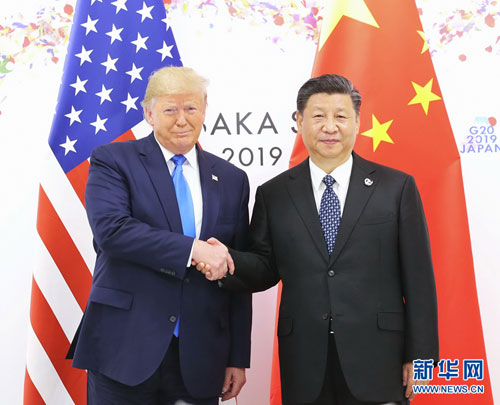
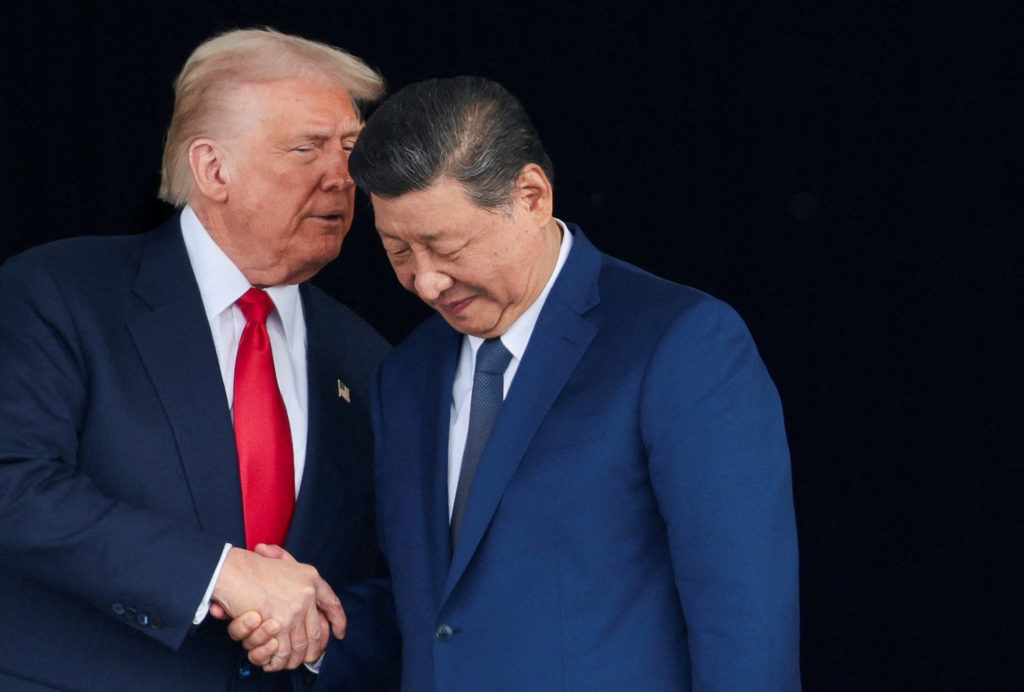
In late 2025, U.S. President Donald Trump embarked on a high-profile diplomatic tour to Asia which included a key meeting with Chinese President Xi Jinping. This summit became a focal point in U.S.–China relations, touching on trade, technology, national security, and global geopolitics. The visit marks a shift—if only temporarily—in the tone and mechanics of the bilateral relationship.
This article offers a detailed overview of the visit, the agreements reached, and its effects across economic, technological, strategic, and geopolitical domains. We will also look at potential longer-term implications and caveats.
Background
The U.S.–China relationship has been marked by rising tensions over trade imbalances, technology competition (especially semiconductors and rare earth elements), maritime and security issues in the Indo-Pacific, and global-supply‐chain vulnerabilities. Under Trump’s prior term and into this one, tariffs and export controls were front and centre.
As one analysis puts it, going into the October 2025 summit, the relationship was in a state of “purgatory” — neither full conflict nor stable cooperation. (csis.org)
The meeting between Trump and Xi at Busan, South Korea (on the sidelines of the APEC 2025 summit) crystallised a set of agreements. (ويكيبيديا)
Key Agreements and Outcomes
Here are some of the main outcomes of the visit and what the two sides committed to:
-
Tariffs and trade: The U.S. agreed to reduce some of its tariffs on Chinese goods. For example, the U.S. “fentanyl-related” tariff (previously 20 %) on Chinese imports was cut back to 10 %. At the same time, China suspended or postponed a host of retaliatory tariffs and measures. (china-briefing.com)
-
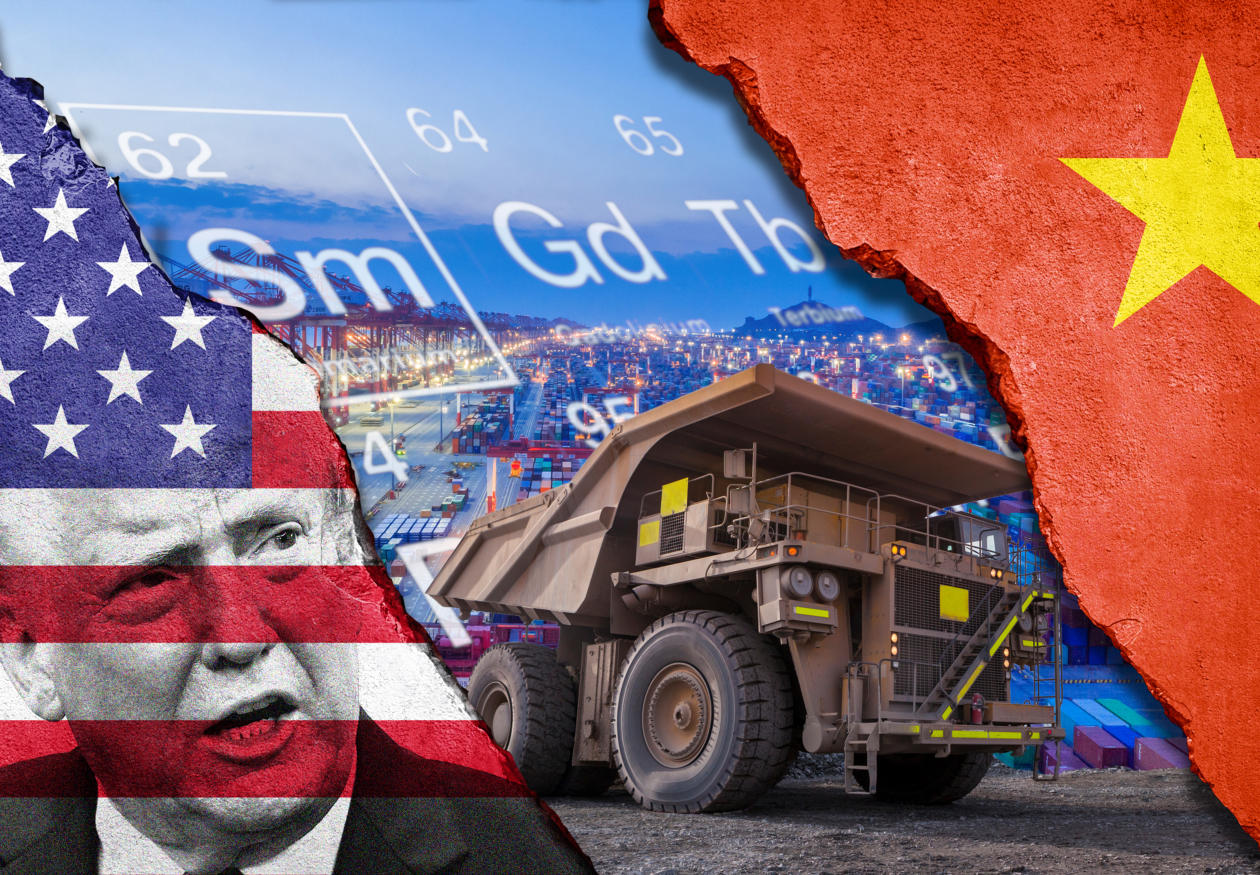
Rare earths & export-controls: One of the major issues was China’s planned export controls on rare earth elements and related materials, and extraterritorial rules. China agreed to suspend its newly announced export restrictions and issue general licences for key materials such as gallium, germanium, antimony, graphite, and rare-earth elements. (The White House)
-
Agricultural trade: China committed to increased purchases of U.S. agricultural products—for instance soybeans and sorghum. (The White House)
-
Maritime/ship-building sector: The U.S. agreed to suspend for a year certain investigations and duties related to China’s ship-building and port sectors; China reciprocated with a suspension of its own retaliatory actions. (china-briefing.com)
-
Fentanyl & precursor chemicals: The deal included China’s commitment to halt or significantly reduce the export of certain precursor chemicals used in the production of fentanyl into the U.S. (The White House)
-
Institutionalising dialogue: There was agreement on more regular consultations and reviews of the deal (annually) rather than ad-hoc escalation. (الجارديان)
So, the visit produced both substantive concessions and symbolic gestures that seek to stabilise the bilateral economic and strategic relationship.
Impact by Domain
Below is a breakdown of how this visit and its outcomes are likely to affect different spheres.
Economic & Trade
-
The reduction of tariffs and suspension of some controls alleviates immediate pressure on supply chains and trade flows between the U.S. and China. As noted: “The suspension and reduction of tariffs … will help stabilise bilateral trade flows and ease cost pressures.” (china-briefing.com)
-
For U.S. agriculture, especially growers of soybeans, sorghum and other commodities, the deal opens increased export opportunities to China. This could help U.S. farm incomes.
-
For businesses in high-tech sectors and those reliant on rare earths and related materials, the pause in Chinese export restrictions provides breathing space. This is particularly relevant for companies using materials like gallium/germanium and graphite.
-
The ship-building and maritime sectors see less immediate escalation, meaning global shipping costs or disruptions may have less upside risk in the short term.
-
However, many of these measures are temporary (suspensions, one-year pauses) rather than permanent. Thus, while stability improves in the short term, structural issues remain.
Technology & Supply Chains
-
The rare-earth supply chain is a critical global concern. China remains dominant in mining, processing and refined rare earths; its willingness to suspend restrictions stabilises the immediate risk. (china-briefing.com)
-
Yet, the fact that China retains earlier export controls means that the leverage remains—for example, the agreement did not fully eliminate all export controls. (china-briefing.com)
-
The technology competition between the U.S. and China (semiconductors, AI, quantum computing) remains a strategic battlefield. The agreement may ease pressure in the near term, but does not signal a full retreat of either side’s strategic posture.
-
For multinational companies, this could mean some de-risking of supply chain disruptions, but not a wholesale return to business-as-usual. Firms will likely continue to diversify sourcing away from China or build redundancy given the strategic unpredictability.
Strategic & Security
-
The visit helps reduce immediate risk of a trade-escalation triggering broader strategic confrontation. Both sides signalling a willingness to stabilise is significant.
-
However, strategic distrust remains high. Analysts caution that China may hold an upper hand in negotiations, believing it can wait out the U.S. on certain issues. (csis.org)
-
The deal's impacts for U.S. alliances in the Indo-Pacific: If the U.S. appears to soften on China economically, allied states may question U.S. resolve on security commitments. This is a strategic risk emphasised in expert commentary. (csis.org)
-
The agreement covers non-traditional security areas (chemicals for fentanyl, rare earths) but does not substantially address core military or territorial issues (Taiwan, South China Sea, etc). So strategic competition continues but the framework of escalation is moderated.
Geopolitical & Global Implications
-
A thawing of U.S.–China trade tensions could encourage other countries to engage with China more confidently (or negotiate more ambitiously with the U.S.).
-
For third-party countries, this might relieve some of the anxieties of collateral damage from a U.S.–China trade war, but also complicate alignment decisions (e.g., whether to lean toward U.S. or China).
-
For the global economy, the reduction of one major bilateral risk factor is positive—especially for global supply chains, commodity markets and investor sentiment.
-
However, because many of the terms are temporary and the underlying rivalry remains, the global relief may be cautious and short-lived.
Significance & Longer-Term Outlook
-
The visit is significant in that it marks a de-escalation of recent aggressive trade posture, and a shift toward dialogue and management of conflict rather than open confrontation.
-
It may be viewed as a reset (or quasi-reset) of U.S.–China economic relations, setting the stage for more durable arrangements. However, the word “reset” should not be overstated because the structural competition remains.
-
The real test will be implementation: can both sides follow through on increased agricultural purchases, relax export controls meaningfully, and build effective mechanisms for compliance and monitoring?
-
If one side perceives that the other is reneging, the stability may quickly unravel.
-
For the U.S., a key risk is that by seeking trade relief and concessions, it may undercut its negotiating leverage on non-economic issues (like technology and strategic competition).
-
For China, the risk is that while gaining economic relief and legitimacy, it may still face long-term pressure from the U.S. and its allies on tech decoupling, supply-chain realignment and strategic containment.
Caveats & Risks
-
Many of the concessions are temporarily suspended or deferred (for one year, etc.). They do not constitute full removal of tariffs or export controls. (china-briefing.com)
-
The documentation of enforcement mechanisms remains limited; vague commitments may lead to disappointment.
-
Some observers believe China entered the talks in a strong position and achieved favourable terms while the U.S. made more visible concessions. (csis.org)
-
Overshadowing all this is the continuing strategic rivalry: Taiwan, the South China Sea, human-rights issues, technology dominance—these remain unresolved and could flare up regardless of trade détente.
-
External shocks (global recession, pandemic, commodity price shocks) could derail the nascent stability.
Conclusion
President Trump’s visit and meeting with President Xi represent a pivotal moment in U.S.–China relations. On one hand, the deal offers welcome relief across trade, technology and supply chains. On the other hand, it is not a comprehensive solution to the structural competition between the world’s two largest economies.
The real question will be: Will this mark the beginning of a new stable framework for managing U.S.–China relations — or simply a temporary pause in a deeper rivalry?
For policymakers, businesses and observers alike, the next 12 to 24 months will be critical. Will commitments be implemented? Will the suspension of tariffs lead to deeper cooperation, or will both sides return to escalation once the instruments expire?
As the visit shows, diplomacy matters — but so does follow-through.
تعليقات
إرسال تعليق
موضوع مثير للاهتمام